
 ALTABSH MACHINE TOOLS · TOOLING GUIDE
دليل اختيار أقلام الخراطة AKKOAKKO Turning Tool Selection Guide
اختر العربية أو الإنجليزية لعرض الدليل الكامل.
Choose Arabic or English to open the complete guide.
اختر اللغة / Choose your language
العربية — الدليل الكاملاضغط لفتح أو إغلاق الدليل العربي
كيف تختار قلم الخراطة المناسب من AKKO؟
افهم كود الأداة، وحدد المقاس والاتجاه والفدية المناسبة. دليل عملي لأقلام الخراطة الخارجية والداخلية، مع أمثلة من منتجات متجر الطبش.
ابدأ بنوع العملية
هل تعمل على السطح الخارجي للقطعة، أم داخل تجويف؟ حدد ذلك أولًا، ثم طابق أبعاد الأداة مع بيت القلم وتجهيزات مخرطتك.
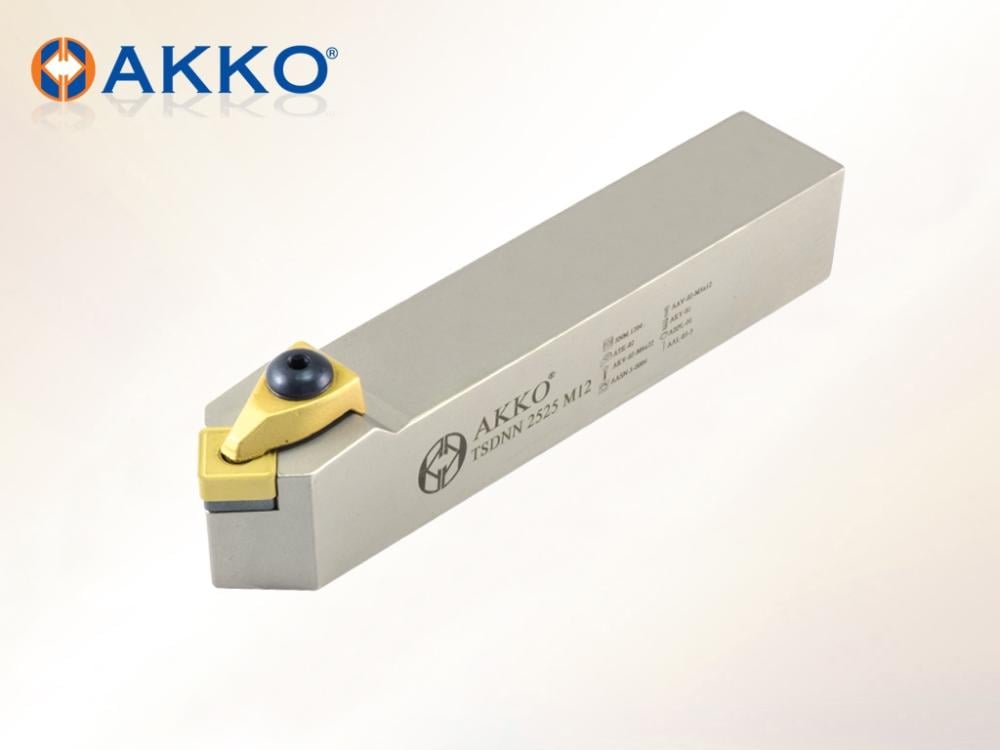
قلم خراطة خارجي
لعمليات التشغيل على الأسطح الخارجية. راجع ارتفاع وعرض ساق الحامل واتجاه القطع وهندسة الرأس قبل اختيار المقاس.
تصفح أقلام الخراطة الخارجية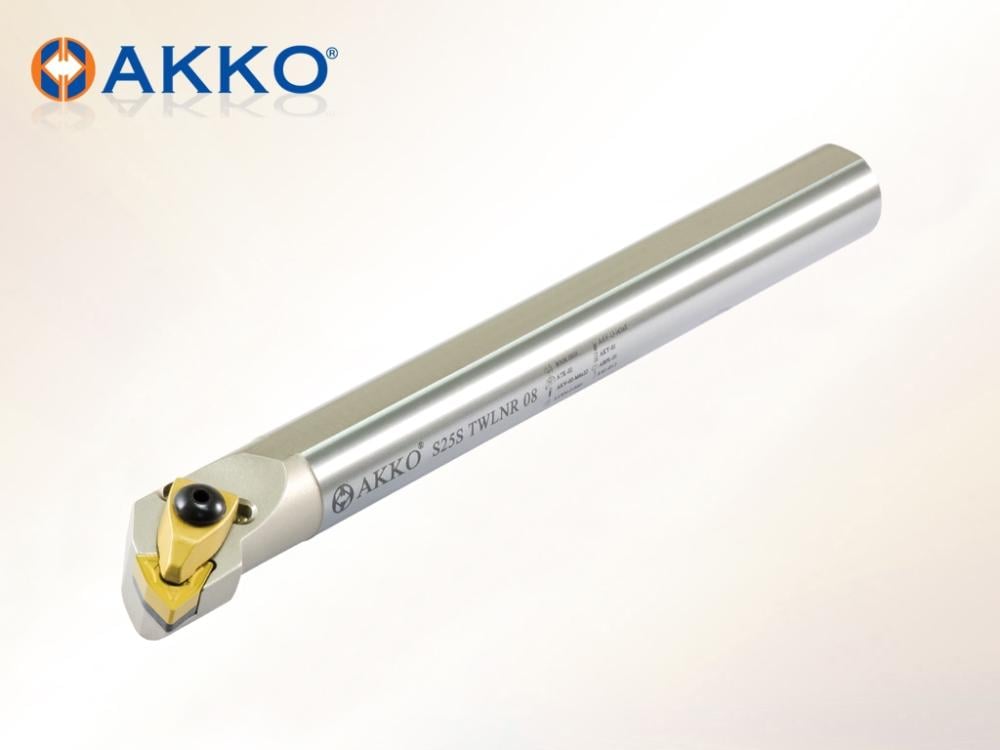
قلم خراطة داخلي «بورنج»
لتشغيل الأسطح داخل التجاويف. راجع قطر الساق والحد الأدنى لقطر التجويف وعمق الوصول المطلوب.
تصفح أقلام البورنج الداخليةكيف تقرأ كود قلم الخراطة الخارجي؟
الحروف الأولى تصف هندسة الحامل وطريقة تثبيت الفدية، ثم تأتي أبعاد الساق ورمز الطول ومقاس الفدية. اقرأ الرموز اللاتينية من اليسار إلى اليمين.
مثال تطبيقي: AKKO TSDNN 1616 H12
| الرمز | معناه في هذا المثال |
|---|---|
| T | نظام تثبيت الفدية بمشبك الضغط في عائلة T-System. |
| S | فدية مربعة؛ زاوية رأس الفدية 90°. |
| D | هندسة الحامل؛ زاوية الاقتراب لهذا الموديل 45°. |
| N الأولى | زاوية خلوص الفدية 0°. |
| N الأخيرة | اتجاه محايد Neutral. |
| 16 × 16 | ارتفاع وعرض ساق الحامل: 16 × 16 مم. |
| H | رمز الطول؛ الطول LF لهذا الموديل 100 مم. |
| 12 | رمز مقاس الفدية؛ مرجع التوافق لهذا الموديل SN..1204... |
زاويتان مختلفتان: زاوية رأس الفدية في المثال 90°، بينما زاوية اقتراب الحامل 45°. اختر هندسة الحامل وفق مسار القطع وإمكانية الوصول للسطح المطلوب.
كيف تقرأ كود قلم البورنج الداخلي؟
يبدأ كود البورنج بنوع الساق وقطرها ورمز الطول، ثم وصف رأس الأداة واتجاهها ومقاس الفدية.
مثال تطبيقي: AKKO S25S TWLNR 06
| الرمز | معناه في هذا المثال |
|---|---|
| S الأولى | ساق فولاذية. |
| 25 | قطر ساق التثبيت 25 مم. |
| S الثانية | رمز الطول؛ LF = 250 مم. |
| T | تثبيت الفدية بمشبك الضغط Wedge Clamp. |
| W | شكل فدية تريجون بزاوية رأس 80°. |
| L | هندسة رأس الأداة؛ زاوية اقتراب 95°. |
| N | زاوية خلوص الفدية 0°. |
| R | اتجاه قطع يميني Right-hand. |
| 06 | رمز مقاس الفدية؛ مرجع التوافق WN..0604... |
قطر الساق يختلف عن الحد الأدنى لقطر التجويف: ساق S25S TWLNR 06 قطرها 25 مم، لكن الحد الأدنى لقطر التجويف DMIN لهذا الموديل هو 32 مم. راجع الرسم الفني للمقاس المختار.
لثبات أفضل في البورنج، استخدم أكبر قطر ساق يسمح به التجويف مع فراغ مناسب لإخلاء الرايش، وقلل بروز الأداة إلى القدر الذي تتطلبه العملية. الطول الكلي LF لا يساوي عمق التشغيل المتاح.
طابق الفدية مع الموديل الكامل
تشابه شكل الفدية وحده لا يكفي. ابدأ بمرجع الفدية المذكور في صفحة الحامل، ثم راجع المقاس والسماكة وطريقة التثبيت. اختر خامة الفدية وطلاءها وكاسر الرايش وفق مادة الشغلة وظروف التشغيل.
| الموديل | مرجع الفدية المتوافقة |
|---|---|
| TSDNN 1616 H12 | SN..1204.. |
| TSDNN 2525 M15 | SN..1506.. |
| S25S TWLNR 06 | WN..0604.. |
| S25S TWLNR 08 | WN..0804.. |
النقطتان «..» تعنيان أن المرجع يترك خانات أخرى في كود الفدية. أكمل المطابقة من جدول الشركة المصنعة؛ الأرقام 06 أو 12 ليست قياسًا موحدًا لطول الضلع لكل أشكال الفديات.
تصفح الفديات وسكاكين القطعأسئلة تساعدك قبل الطلب
ما الفرق بين R وL وN؟
تحدد هذه الحروف اتجاه الأداة في موضعها الخاص داخل الكود: يمين R أو يسار L أو محايد N عند توفره. طابق الاتجاه مع وضعية الحامل ومسار التشغيل، ولا تعتمد على جهة ظهور القلم في الصورة.
هل كل حرف S في الكود له المعنى نفسه؟
المعنى مرتبط بموقع الحرف. في بداية كود البورنج قد يصف الساق الفولاذية، وفي خانة الطول يرمز إلى طول محدد، وفي خانة شكل الفدية يعني الشكل المربع. اقرأ الكود كاملًا وبالترتيب.
هل أستطيع اختيار البورنج حسب قطر الساق فقط؟
راجع أيضًا DMIN وعمق الوصول ومساحة خروج الرايش وطريقة التثبيت. رأس الأداة قد يتطلب تجويفًا أكبر من قطر الساق، كما أن جزءًا من طول الأداة يُستخدم داخل الحامل.
ماذا أرسل لفريق الطبش للمساعدة في الاختيار؟
أرسل صورة واضحة لكود القلم والفدية الحاليين، ومقاس بيت القلم، ومادة الشغلة، ونوع العملية. للبورنج أضف قطر التجويف وعمقه، مع صورة أو رسم للجزء المطلوب تشغيله إن أمكن.
المراجع: كتالوج AKKO الفني، وصفحات الموديلات المرتبطة أعلاه، وإرشادات ثبات أدوات البورنج من Sandvik Coromant. راجع مواصفات الموديل المختار والتوفر الحالي في صفحة المنتج. إعداد الطبش للمخارط والمعدات الصناعية — نوفمبر 2026.
English — Full guideClick to open or close the English guide
How do you choose the right AKKO turning tool?
Understand the tool code and choose the correct size, cutting hand and insert. A practical guide to external turning holders and internal boring bars, with examples from Altabsh Store.
Start with the operation
Are you machining the outside of the workpiece or working inside a bore? Identify the operation first, then match the tool dimensions to your tool post or holder and lathe setup.
External turning tool holder
For machining external surfaces. Check the holder shank height and width, cutting hand and head geometry before selecting a size.
Browse external turning holdersInternal turning tool / boring bar
For machining surfaces inside a bore. Check the shank diameter, minimum bore diameter and required reach.
Browse internal boring barsHow to read an external tool holder code
The first letters describe the holder geometry and insert clamping method, followed by the shank dimensions, length code and insert size code. Read the code from left to right.
Worked example: AKKO TSDNN 1616 H12
| Code | Meaning in this example |
|---|---|
| T | Wedge-clamp insert mounting in the T-System family. |
| S | Square insert with a 90° corner angle. |
| D | Holder geometry; this model has a 45° approach angle. |
| N (first) | 0° insert clearance angle. |
| N (last) | Neutral cutting hand. |
| 16 × 16 | Shank height and width: 16 × 16 mm. |
| H | Length code; this model has an LF of 100 mm. |
| 12 | Insert size code; this model uses the insert reference SN..1204... |
Two different angles: The insert corner angle in this example is 90°, while the holder approach angle is 45°. Select the holder geometry to suit the cutting path and access to the required surface.
How to read an internal boring bar code
A boring bar code starts with the bar type, shank diameter and length code, followed by the cutting head geometry, hand and insert size.
Worked example: AKKO S25S TWLNR 06
| Code | Meaning in this example |
|---|---|
| S (first) | Steel shank. |
| 25 | 25 mm mounting shank diameter. |
| S (second) | Length code; LF = 250 mm. |
| T | Wedge-clamp insert mounting. |
| W | Trigon insert shape with an 80° corner angle. |
| L | Cutting head geometry; 95° approach angle. |
| N | 0° insert clearance angle. |
| R | Right-hand cutting direction. |
| 06 | Insert size code; compatible insert reference WN..0604... |
Shank diameter and minimum bore diameter are different: The S25S TWLNR 06 has a 25 mm shank, but its minimum bore diameter, DMIN, is 32 mm. Check the technical drawing for the selected model.
For better boring stability, use the largest shank diameter that fits the bore with adequate chip clearance, and keep the tool overhang as short as the operation allows. Overall length LF is different from usable machining reach.
Match the insert to the complete tool model
A matching insert shape alone is not enough. Start with the insert reference listed on the holder page, then check the size, thickness and clamping method. Choose the insert grade, coating and chipbreaker to suit the workpiece material and cutting conditions.
| Tool model | Compatible insert reference |
|---|---|
| TSDNN 1616 H12 | SN..1204.. |
| TSDNN 2525 M15 | SN..1506.. |
| S25S TWLNR 06 | WN..0604.. |
| S25S TWLNR 08 | WN..0804.. |
The dots “..” leave other positions in the insert designation unspecified. Complete the match using the manufacturer’s table. Codes such as 06 or 12 do not represent one universal edge length for every insert shape.
Browse cutting insertsQuestions to check before ordering
What is the difference between R, L and N?
In the cutting-hand position of the code, R means right-hand, L means left-hand, and N means neutral where available. Match the hand to the mounting orientation and machining path; do not judge it only by how the tool appears in a photo.
Does S always mean the same thing in a tool code?
Its meaning depends on its position. At the start of a boring bar code, S can identify a steel shank. In the length position it identifies a specific length, and in the insert-shape position it means square. Read the complete code in order.
Can I select a boring bar using only the shank diameter?
Also check DMIN, required reach, chip clearance and clamping. The cutting head may need a bore larger than the shank diameter, and part of the tool length is held inside the mounting holder.
What should I send Altabsh for selection assistance?
Send a clear photo of your current holder and insert codes, the mounting size, workpiece material and operation. For boring, include the bore diameter and depth, plus a photo or drawing of the feature if available.
References: AKKO technical catalogue, the linked product pages above, andSandvik Coromant boring stability guidance. Check the selected model specifications and current availability on its product page. Prepared by Altabsh Machine Tools — November 2026.
